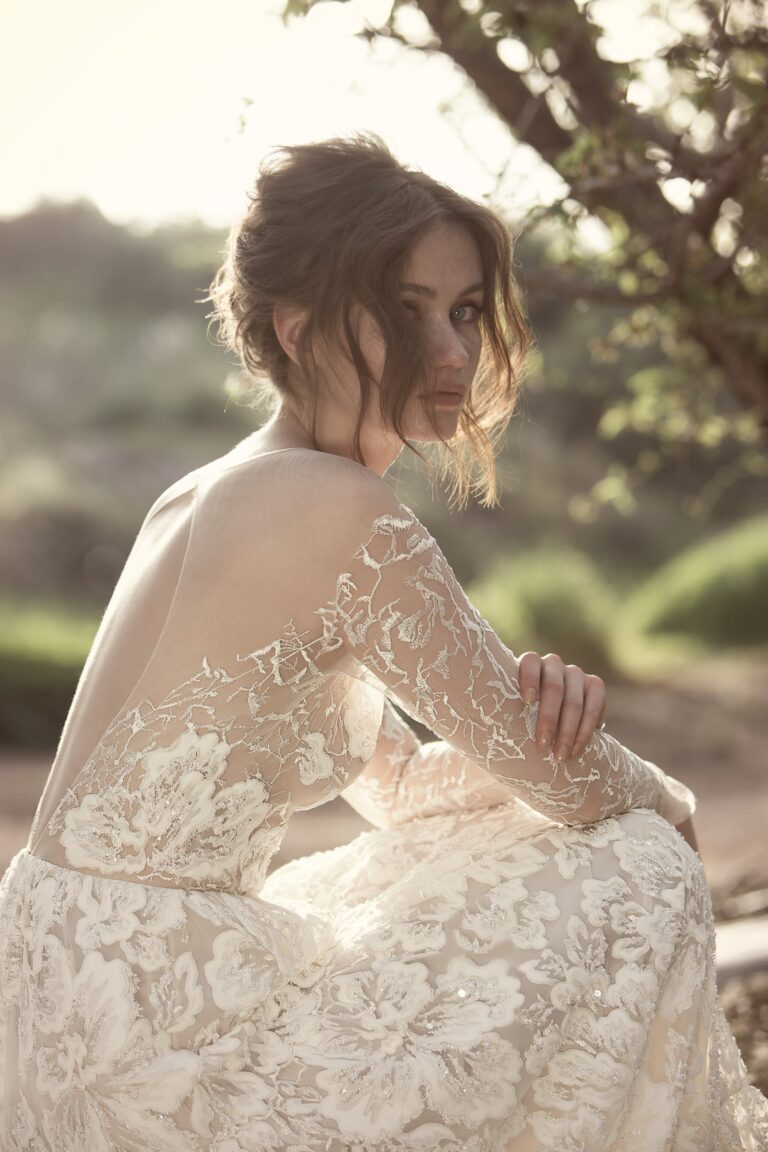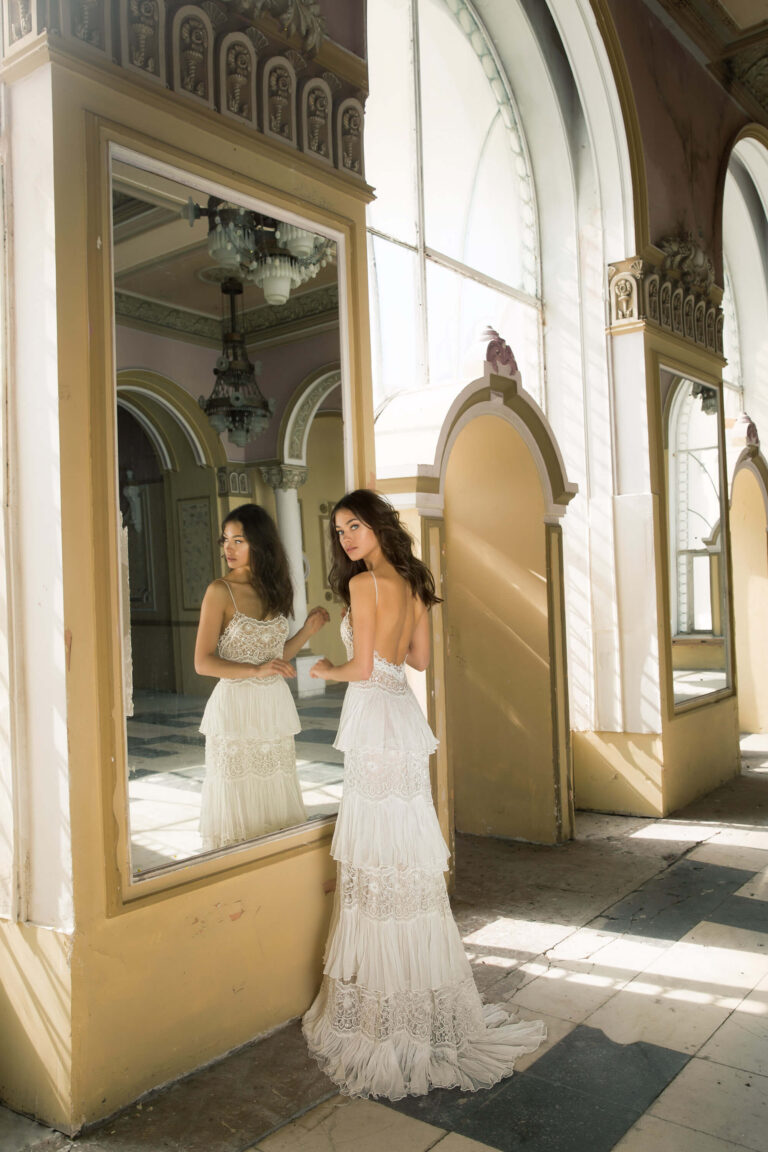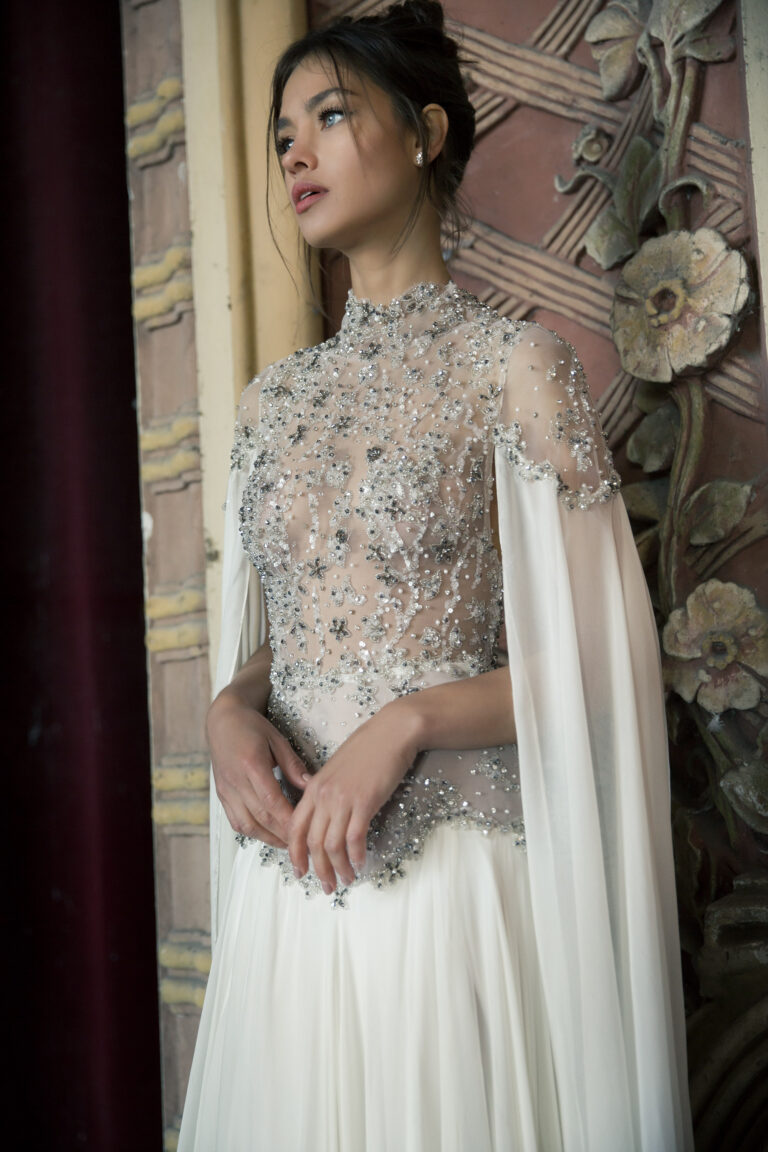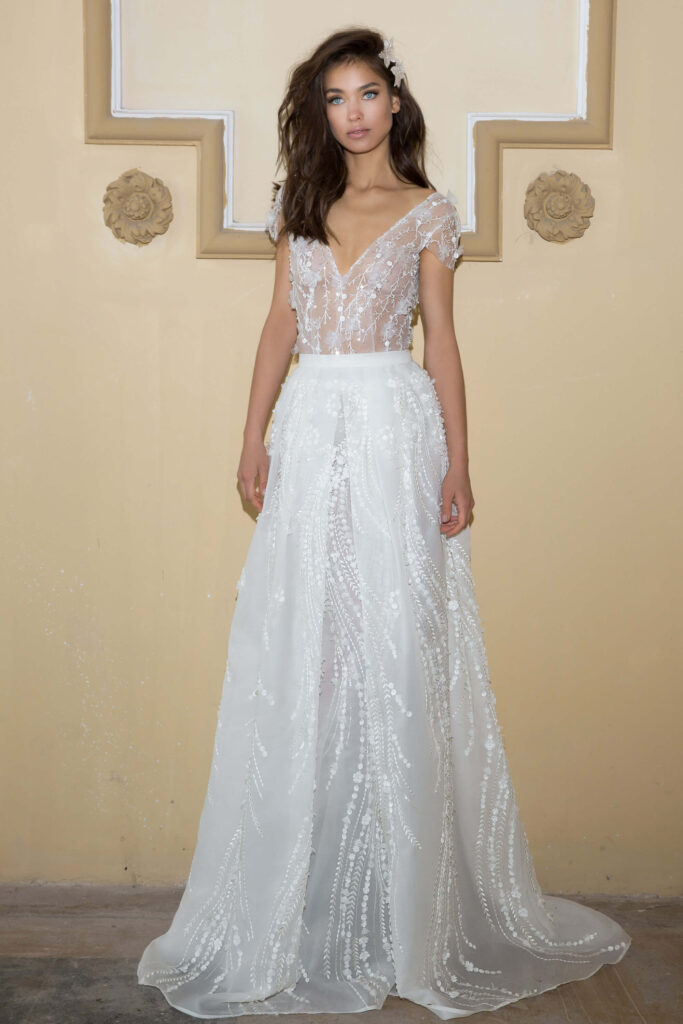
Before fabric, before lace, before the neckline you have been saving on your phone for months – there is the silhouette. The overall shape of a wedding dress decides how it moves, how it feels to wear for twelve hours, and how it frames you in every photograph. Get the silhouette right, and everything else falls into place.
Here is a calm, practical guide to the classic shapes, and to the questions worth asking yourself before your first fitting.
A-line: the shape that works almost everywhere
An A-line dress is fitted through the bodice and flares gently from the waist to the hem, like the letter A. It is the most forgiving and versatile silhouette there is: it defines the waist, skims the hips and lets you walk, sit and dance comfortably.
A-line works beautifully for almost every body type and almost every venue, from a garden ceremony to an evening reception in a hall. If you are not sure where to start, start here.
Mermaid and fit-and-flare: drama and curves
A mermaid dress hugs the body through the hips and thighs and flares out at or below the knee. A fit-and-flare follows the same idea but opens higher, at mid-thigh, which makes it easier to move in.
These silhouettes celebrate an hourglass figure and create a striking, elegant line. The trade-off is movement: a true mermaid asks for a little patience on the dance floor. Many brides love it for the ceremony and add a lighter second look for the party.
Sheath and column: effortless and modern
A sheath dress follows the natural line of the body from neckline to hem, without a full skirt. In a fluid fabric such as crepe or silk, it feels minimal, modern and remarkably comfortable.
Sheath dresses suit petite and tall brides alike, and they shine at intimate weddings, city ceremonies and destination celebrations. Because the shape is so clean, the details – the back, the neckline, the drape – carry the whole look.
Ball gown: the fairytale
A fitted bodice with a full, voluminous skirt: the ball gown is the most romantic and ceremonial of all silhouettes. It looks breathtaking in grand venues and long aisles.
A ball gown is heavier and takes up space, so consider the season, the venue and how much you plan to dance. Lighter layers of tulle can keep the volume while reducing the weight.
How to choose: four honest questions
- Where is the wedding? A beach, a garden and a ballroom each call for a different shape and length of train.
- How do you want to feel? Free and light, or held and structured? Comfort shows in every photo.
- What do you love about your body? Choose a silhouette that highlights it – your waist, your shoulders, your back.
- Will you change for the party? If a second look is part of the plan, you can be bolder with the ceremony dress.
Try on more than one shape
Almost every bride is surprised in the fitting room. The silhouette you were sure about may feel wrong, and the one you never considered may feel instantly right. Try at least two or three different shapes before you decide – it is the fastest way to discover what truly suits you.
In a personal appointment at Vered Vaknin’s studio, we look at the dress, but also at you: your proportions, your style and the story of your day. When a dress is designed for you, the silhouette can be adjusted to your body rather than the other way around.