Two dresses can share the same silhouette and still feel completely different – because of the fabric. Fabric decides whether a skirt floats or falls, whether a bodice feels soft or sculpted, and how the dress catches the light in your photographs.
Here is a short guide to the fabrics you are most likely to meet in the fitting room.
Lace: romance in every detail
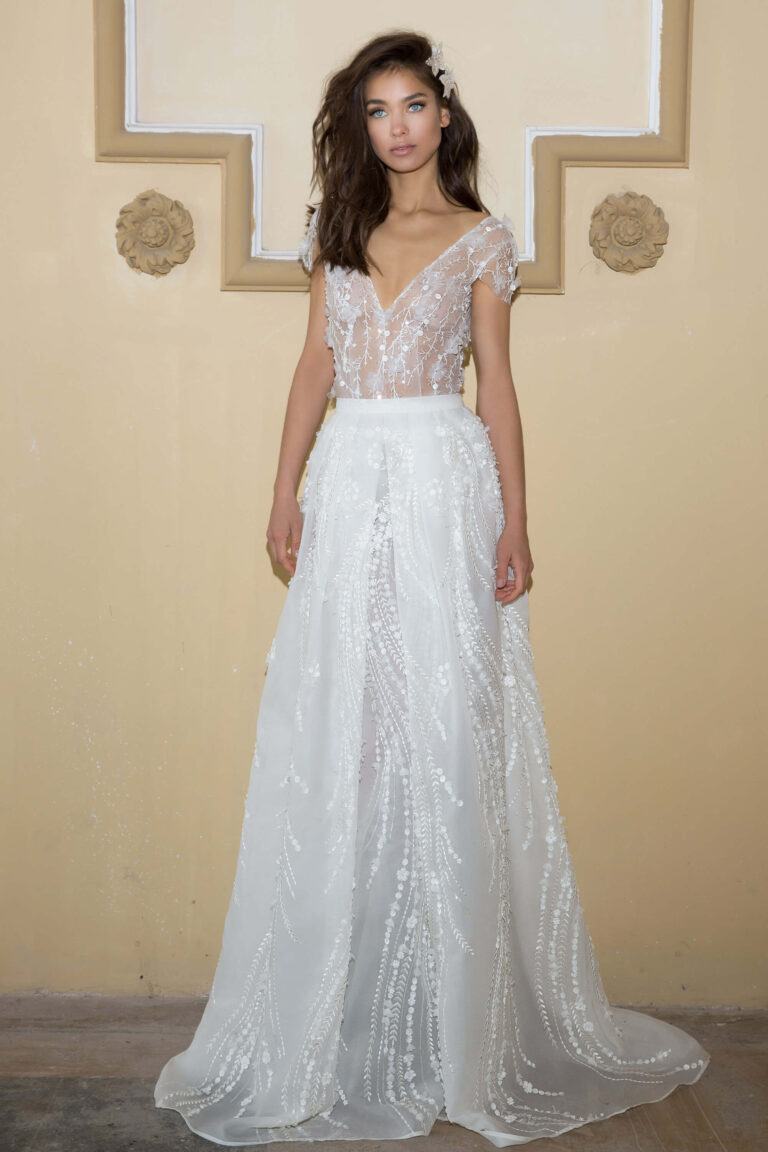
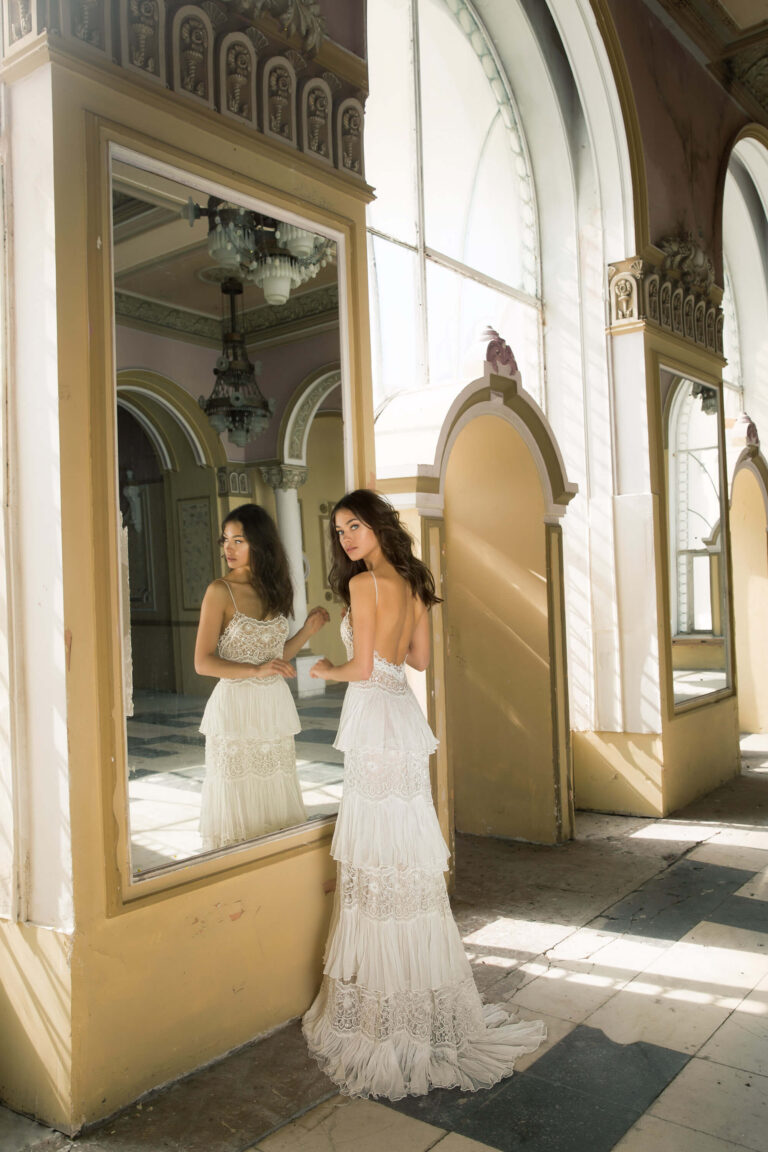
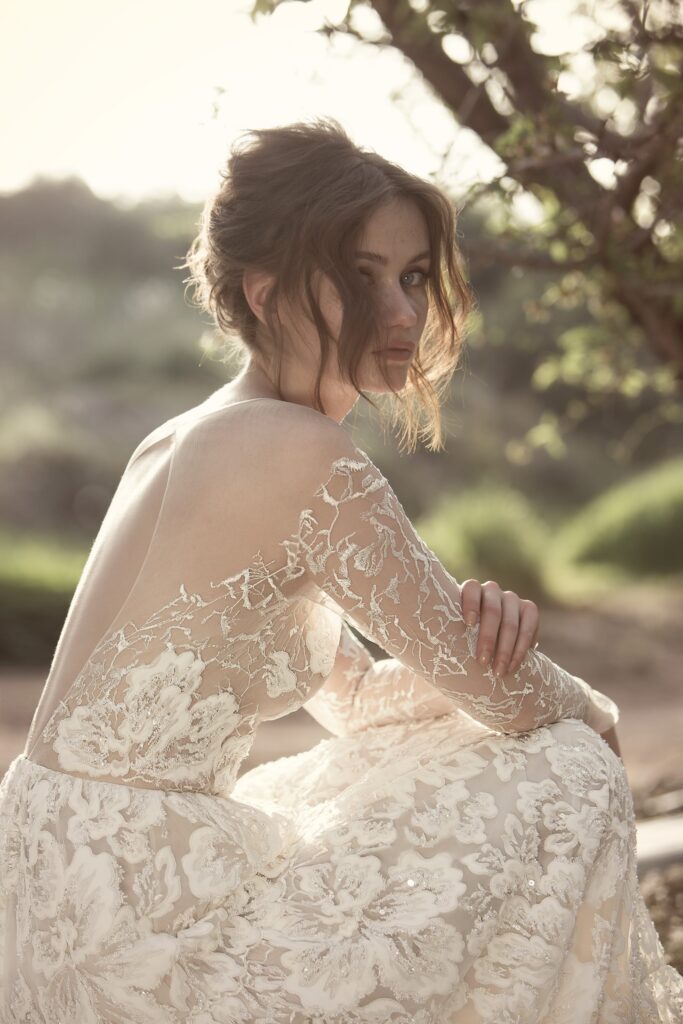
Lace is the signature of bridal fashion. It can be delicate and airy, or rich and three-dimensional with embroidery, beading and texture. Lace can cover an entire dress, or appear as an accent on sleeves, a back or a bodice.
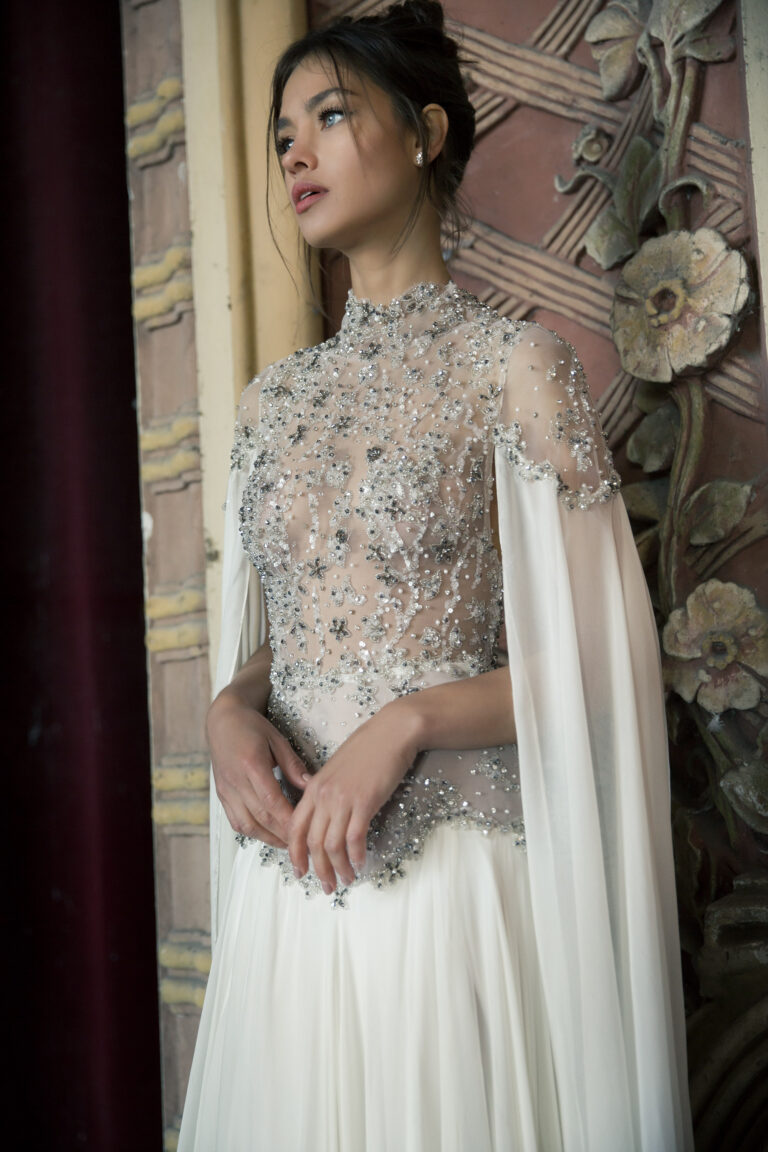
Why brides love it: it adds depth and craftsmanship, photographs beautifully and works with almost every silhouette. Placed carefully on a sheer base, lace can also create sleeves and high necklines that feel light rather than heavy.
Silk: quiet luxury
Silk comes in many weaves – satin, mikado, crepe and more. It has a natural sheen, a smooth hand and a way of moving with the body that is hard to imitate.
Good to know: silk is breathable and elegant, but it also shows creases, so it rewards careful handling on the day. It is ideal for clean, minimal designs where the fabric itself is the star.
Crepe: clean lines, modern feel
Crepe is a matte fabric with a subtle texture and a beautiful drape. It skims the body without clinging and holds clean, architectural lines.
Best for: sheath and column dresses, minimal necklines and dramatic open backs. Crepe is a favourite for modern brides who want elegance without excess.
Tulle: volume without weight
Tulle is a fine, sheer net. Layered, it creates the soft volume of a romantic skirt; in a single layer, it becomes the invisible base for lace and embroidery.
Why it works: it is light, it moves, and it gives a dreamy, ethereal effect – especially outdoors and in natural light.
Chiffon and organza: air and movement
Chiffon is soft, flowing and slightly transparent; organza is crisper and holds its shape. Both are lightweight and perfect for warm weather, flowing skirts and delicate sleeves or capes.
Choosing the right fabric for your day
- Season and climate: for a summer wedding, choose breathable, light fabrics; heavier silks and structured weaves suit cooler evenings.
- Venue: flowing fabrics come alive outdoors; structured fabrics shine in grand indoor spaces.
- Comfort: you will wear the dress for many hours – touch the fabric, sit, move and dance in it.
- Photography: matte fabrics give a soft, refined look; satin and silk reflect light and add glamour.
The most beautiful dresses often combine fabrics: a crepe base with lace sleeves, a tulle skirt under a lace bodice, an organza cape over silk. At Vered Vaknin’s studio, every combination is chosen with you in mind – how it looks, and just as important, how it feels.